
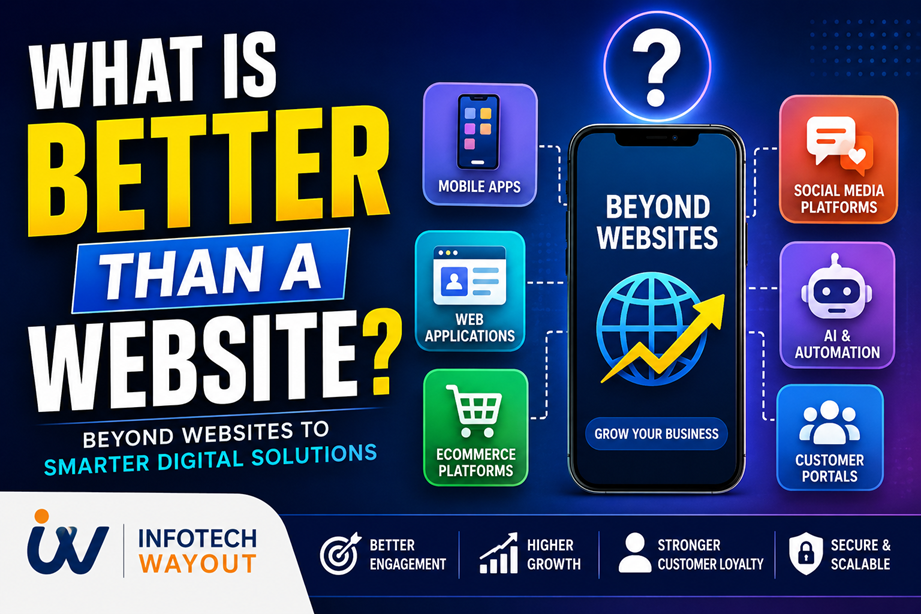
In today’s digital world, almost every business understands the importance of having a website. For years, websites have been considered the foundation of an online presence. Whether you run a small local business, an e-commerce brand, or a large enterprise, a website helps customers discover your products and services online.
However, technology has evolved rapidly. Businesses now have access to advanced digital tools that go beyond traditional websites. Many entrepreneurs and companies are now asking an important question:
Is there something better than a website?
The answer depends on your business goals, target audience, industry, and customer expectations. In many situations, a website alone is no longer enough. Customers now expect faster experiences, personalized interactions, mobile accessibility, and instant communication.
This is where modern digital solutions come into the picture.
At Infotech Wayout, we help businesses build powerful digital ecosystems that include websites, mobile applications, web apps, ecommerce platforms, SEO strategies, and AI-powered solutions. Instead of relying on a single website, successful businesses today combine multiple digital channels to maximize growth.
In this comprehensive guide, we will explore what can be better than a website, when websites are still important, and how businesses can build stronger digital experiences for long-term success.
Why Traditional Websites Are No Longer Enough
A traditional website can still provide value, but customer behavior has changed significantly over the last decade.
Modern users expect:
- Fast loading speed
- Mobile-friendly design
- Personalized experiences
- Instant support
- Interactive interfaces
- Easy navigation
- Secure transactions
- Mobile app accessibility
- Real-time updates
If a website fails to provide these experiences, users often leave within seconds.
Businesses also face increasing competition online. Millions of websites exist today, making it harder to stand out unless you combine your website with other digital tools.
Some common limitations of traditional websites include:
Limited User Engagement
Websites often struggle to keep users engaged for long periods. Visitors may browse briefly and leave without interacting further.
Lack of Push Notifications
Unlike mobile apps, websites cannot easily send real-time notifications that encourage users to return.
Reduced Mobile Experience
Although responsive web design helps, mobile apps usually provide smoother and more optimized experiences.
Lower Customer Retention
Apps and personalized platforms often create stronger long-term customer relationships than websites alone.
Slower Performance
Heavy websites with multiple elements may load slowly, affecting SEO rankings and user experience.
Mobile Apps: One of the Best Alternatives to Websites
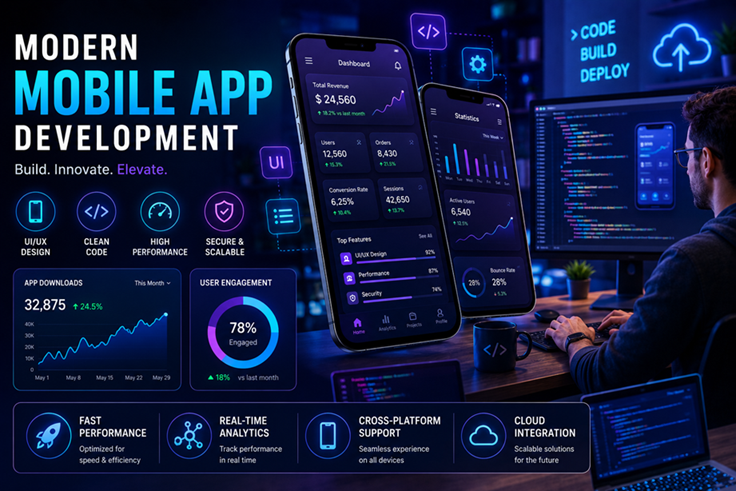
One of the strongest answers to the question “What is better than a website?” is a mobile application.
Today, people spend most of their digital time on smartphones. Businesses that invest in mobile app development often experience higher customer engagement and improved retention.
Why Mobile Apps Are Better Than Websites in Many Cases
Faster Performance
Apps generally load faster than websites because data is stored locally on the device.
Better User Experience
Apps are designed specifically for smartphones, creating smoother interactions.
Push Notifications
Businesses can instantly communicate with users through notifications.
Offline Accessibility
Some app features work even without internet access.
Personalized Experiences
Apps can remember user preferences and provide customized recommendations.
Higher Engagement Rates
Users spend more time on apps than websites.
Improved Brand Loyalty
Having an app installed on a customer’s phone keeps your business constantly visible.
Businesses That Benefit Most from Mobile Apps
Mobile applications are especially effective for:
- Ecommerce businesses
- Food delivery companies
- Healthcare services
- Educational platforms
- Banking and finance
- Fitness brands
- Travel agencies
- Entertainment businesses
Companies investing in app development often outperform competitors relying only on websites.
Web Applications vs Traditional Websites
Another solution that can be better than a standard website is a web application.
A traditional website mainly provides information. A web application allows users to perform actions and interact dynamically.
Examples include:
- Customer dashboards
- Online banking portals
- Project management systems
- CRM software
- Ecommerce platforms
- Learning management systems
Key Benefits of Web Applications
Interactive Functionality
Users can actively engage with the platform.
Better Scalability
Web apps can grow alongside business requirements.
Cloud Integration
Businesses can store and manage data efficiently.
Real-Time Updates
Content and data can update instantly.
Multi-User Collaboration
Teams can work together within the platform.
Examples of Successful Web Applications
Some globally successful businesses primarily operate through web applications rather than simple websites.
These include:
- Trello
- Slack
- Canva
These platforms provide functionality far beyond traditional informational websites.
Ecommerce Platforms That Go Beyond Websites
For online businesses, a basic website may not generate enough conversions anymore.
Modern ecommerce platforms now include:
- AI recommendations
- Live chat systems
- Personalized shopping experiences
- Mobile apps
- Automated email marketing
- Smart analytics
- Social commerce integration
An advanced ecommerce ecosystem can perform far better than a standard ecommerce website.
Features That Modern Ecommerce Businesses Need
Smart Search
AI-powered product search improves customer experience.
One-Click Checkout
Simplified purchasing increases conversions.
Multi-Platform Selling
Businesses can sell through websites, apps, and social media.
Inventory Automation
Stock management becomes easier.
Customer Behavior Tracking
Businesses gain insights into user preferences.
Social Media Platforms as Business Growth Tools
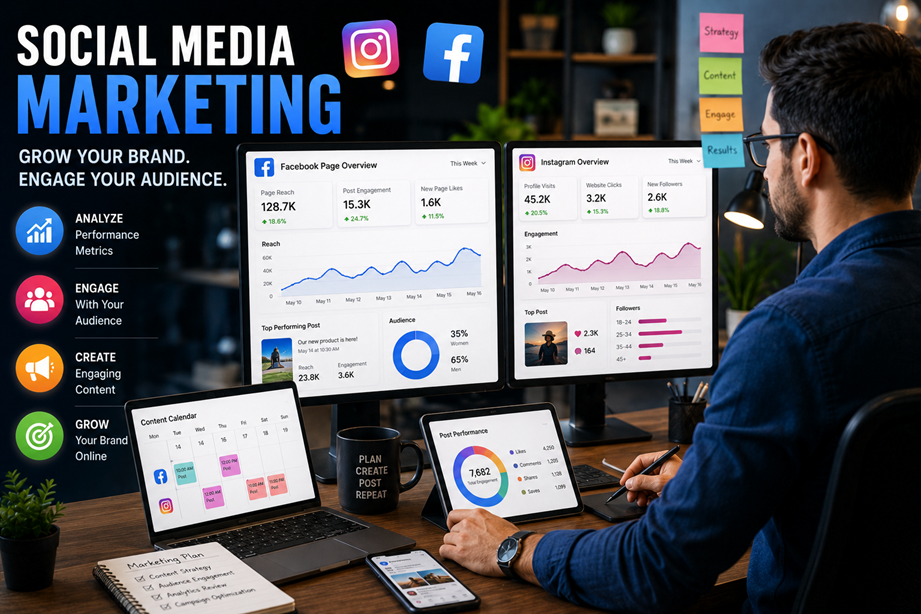
In some industries, social media platforms can generate more engagement than websites.
Platforms like:
allow businesses to interact directly with audiences.
Many small businesses now generate sales entirely through social media platforms without relying heavily on traditional websites.
Advantages of Social Media Over Websites
Direct Communication
Businesses can instantly connect with customers.
Viral Marketing Potential
Content can spread rapidly.
Strong Brand Visibility
Social platforms help businesses stay visible daily.
Community Building
Brands can create loyal customer communities.
Influencer Marketing Opportunities
Businesses can collaborate with creators for growth.
Challenges of Relying Only on Social Media
Despite their advantages, social platforms also have limitations:
- Lack of full ownership
- Algorithm dependency
- Limited customization
- Account suspension risks
- Reduced data control
That is why businesses should combine websites, apps, and social media together.
AI-Powered Platforms and Automation Tools
Artificial Intelligence is transforming how businesses operate online.
AI-powered systems can often provide better customer experiences than static websites.
Examples include:
- AI chatbots
- Recommendation engines
- Virtual assistants
- Automated customer support
- Predictive analytics
How AI Improves Business Performance
24/7 Customer Support
AI chatbots handle customer queries anytime.
Personalized Recommendations
Users receive content based on their interests.
Automated Lead Generation
AI tools capture and nurture leads automatically.
Faster Decision-Making
Businesses gain real-time insights.
Improved Customer Satisfaction
Customers receive quicker responses and support.
Progressive Web Apps: Combining Websites and Apps
Progressive Web Apps, also called PWAs, are becoming increasingly popular.
A PWA combines the best features of websites and mobile apps.
Users can:
- Install the platform like an app
- Use offline functionality
- Receive push notifications
- Experience fast performance
Many businesses prefer PWAs because they cost less than building separate apps for Android and iOS.
Advantages of Progressive Web Apps
Lower Development Costs
Businesses can maintain one platform instead of multiple apps.
Better SEO
PWAs are searchable on Google.
Faster Loading
Performance is highly optimized.
Cross-Platform Compatibility
PWAs work across devices.
Customer Portals and Membership Platforms
In many industries, customer portals are more valuable than traditional websites.
Examples include:
- Online learning platforms
- Subscription services
- Banking dashboards
- Client management systems
These platforms create long-term customer relationships.
Why Membership Platforms Perform Better
Recurring Revenue
Businesses can generate subscription income.
Exclusive Content
Users gain access to premium resources.
Better Customer Retention
Members remain engaged longer.
Personalized Dashboards
Users enjoy customized experiences.
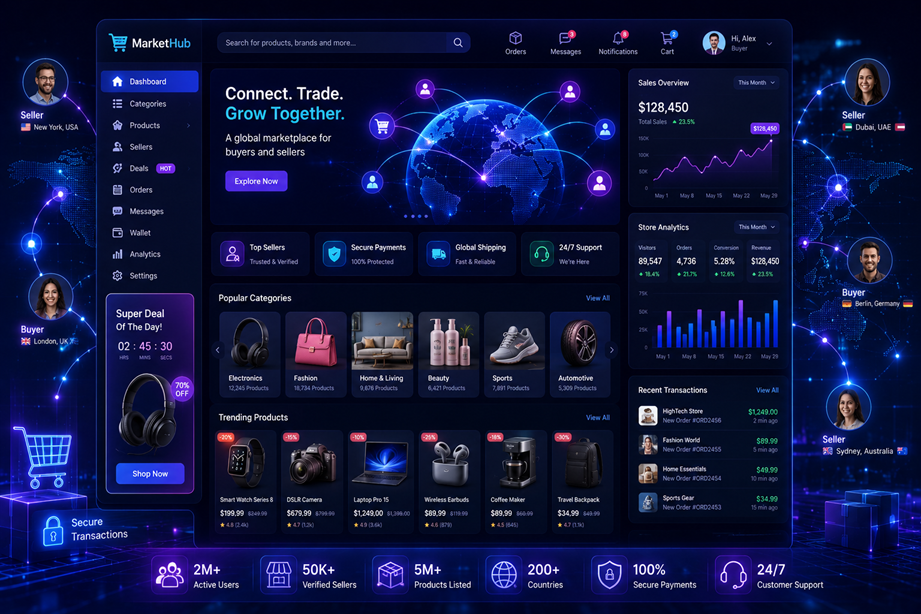
Marketplace Platforms as Powerful Alternatives
Marketplace platforms connect buyers and sellers within one ecosystem.
Examples include:
- Amazon
- Flipkart
- Airbnb
- Uber
These platforms are far more advanced than ordinary websites.
Benefits of Marketplace Platforms
Large User Networks
Marketplaces attract both buyers and sellers.
Scalable Business Models
Businesses can expand rapidly.
Higher User Engagement
Users return frequently.
Multiple Revenue Streams
Platforms earn through commissions, ads, and subscriptions.
When a Website Is Still Important
Even though many solutions can outperform traditional websites, websites remain essential.
A website still acts as:
- Your digital headquarters
- A source of credibility
- An SEO foundation
- A lead generation tool
- A brand identity platform
Without a website, businesses may struggle with long-term visibility on search engines.
The Best Strategy Is Not Replacing Websites
The smartest approach is not choosing between a website and another platform.
The real solution is building a complete digital ecosystem.
Modern businesses succeed by combining:
- Websites
- Mobile apps
- SEO strategies
- Social media marketing
- AI automation
- Ecommerce systems
- Web applications
This creates multiple customer touchpoints and improves business growth.
How Businesses Can Decide What Is Better Than a Website
Every business is unique. The best solution depends on your goals.
Here are some examples:
| Business Type | Better Solution |
|---|---|
| Ecommerce Store | Mobile app + website |
| Educational Platform | Web app + membership portal |
| Food Delivery Business | Mobile app |
| Corporate Company | Website + CRM portal |
| Startup Platform | SaaS web application |
| Local Business | Website + social media |
| Healthcare Clinic | Appointment app + website |
The Future of Digital Business Platforms
The future of online business will likely focus on:
- AI-driven experiences
- Voice search optimization
- Virtual reality platforms
- Augmented reality shopping
- Personalized ecosystems
- Super apps
- Automation systems
Businesses that adapt early will gain competitive advantages.
Why Businesses Need Professional Development Services
Building advanced digital platforms requires technical expertise.
Professional development companies help businesses create:
- Responsive websites
- Mobile applications
- Ecommerce systems
- SEO strategies
- Web applications
- Custom software
- AI integrations
At Infotech Wayout, we specialize in delivering customized digital solutions for businesses across industries.
Our services include:
- Web development
- Web design
- Mobile app development
- Ecommerce development
- SEO services
- Website maintenance
- Custom software solutions

Common Mistakes Businesses Make
Many businesses fail digitally because they:
- Depend only on websites
- Ignore mobile users
- Avoid SEO optimization
- Neglect user experience
- Skip app development
- Ignore customer engagement tools
- Fail to automate processes
Avoiding these mistakes can significantly improve business performance.
SEO Still Matters Regardless of the Platform
Whether you use:
- A website
- A mobile app
- A web application
- A marketplace platform
SEO remains extremely important.
Businesses need:
- Keyword optimization
- Fast loading speed
- Quality content
- Mobile optimization
- Technical SEO
- User-friendly navigation
Without SEO, even advanced platforms may struggle to attract traffic.
Conclusion
So, what is better than a website?
The truth is that there is no single answer. In today’s digital landscape, businesses need more than just a website to stay competitive.
Mobile apps, web applications, AI systems, ecommerce ecosystems, social media platforms, and customer portals can all provide stronger engagement and better business results depending on the situation.
However, the most successful businesses do not completely replace websites. Instead, they build integrated digital ecosystems that combine multiple platforms together.
A website remains an essential foundation, but modern businesses should expand beyond traditional websites to deliver better customer experiences, increase engagement, and maximize growth.
If you want to create a powerful digital presence for your business, Infotech Wayout can help you build advanced web and mobile solutions tailored to your goals.
Frequently Asked Questions (FAQs)
1. What is better than a website for a business?
Mobile apps, web applications, ecommerce platforms, and AI-powered systems can often provide better user engagement and customer retention than traditional websites.
2. Is a mobile app better than a website?
In many cases, yes. Mobile apps offer faster performance, push notifications, offline functionality, and personalized user experiences.
3. Do businesses still need websites?
Yes. Websites remain essential for SEO, brand credibility, and online visibility. They work best when combined with other digital platforms.
4. What is a Progressive Web App?
A Progressive Web App is a hybrid platform that combines the features of websites and mobile apps, offering faster performance and app-like experiences.
5. Can social media replace a website?
Social media can help businesses generate engagement and sales, but it should not fully replace a website because businesses do not own social platforms.
6. Why are web applications becoming popular?
Web applications provide interactive functionality, cloud integration, real-time updates, and scalable solutions for modern businesses.
7. How does AI improve digital platforms?
AI improves customer support, personalization, analytics, automation, and user experiences across websites and apps.
8. Which businesses benefit most from mobile apps?
Ecommerce businesses, healthcare providers, educational platforms, food delivery companies, and service-based businesses benefit greatly from mobile applications.

