
Introduction
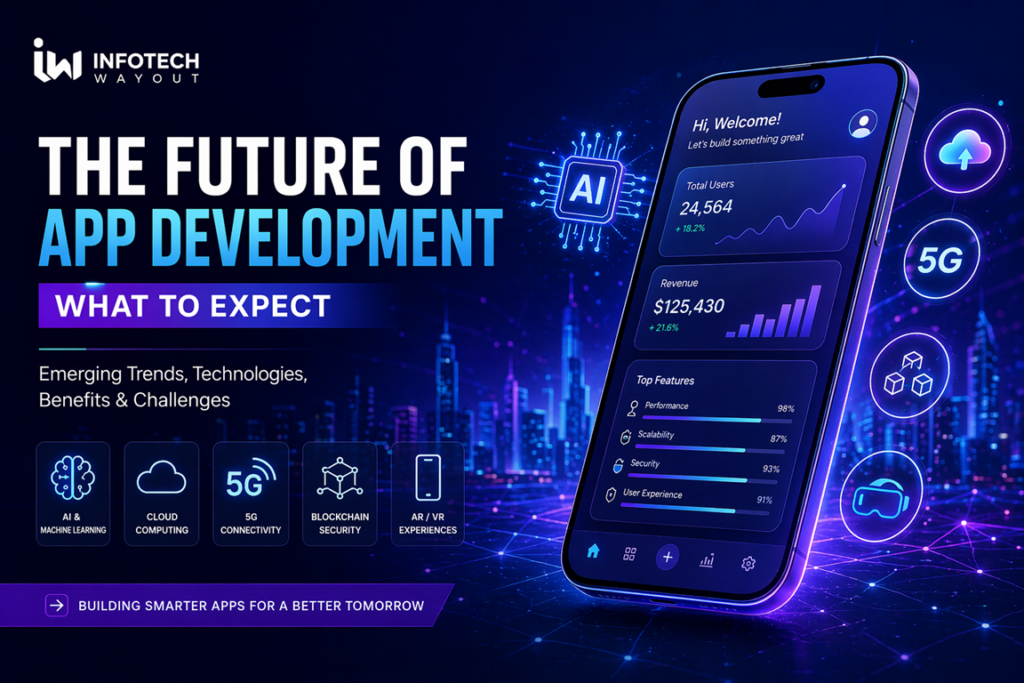
The digital world is evolving at an incredible pace, and mobile applications have become the backbone of modern businesses. From startups to large enterprises, everyone relies on apps to connect with customers, streamline operations, and boost revenue. As technology advances, the future of app development is becoming more exciting, dynamic, and innovative than ever before.
At Infotech Wayout, we closely monitor industry trends to help businesses stay ahead of the curve. In this comprehensive guide, we will explore what lies ahead in app development, including emerging technologies, trends, challenges, and opportunities.
What is the Future of App Development?
The future of app development refers to the evolution of mobile and web applications driven by advancements in technology such as artificial intelligence, cloud computing, 5G, and more. It is not just about building apps anymore. It is about creating intelligent, fast, secure, and highly personalized digital experiences.
Businesses today need apps that are scalable, user-friendly, and future-ready. Developers must adopt new tools, frameworks, and methodologies to meet growing expectations.
Key Trends Shaping the Future of App Development
1. Artificial Intelligence and Machine Learning Integration
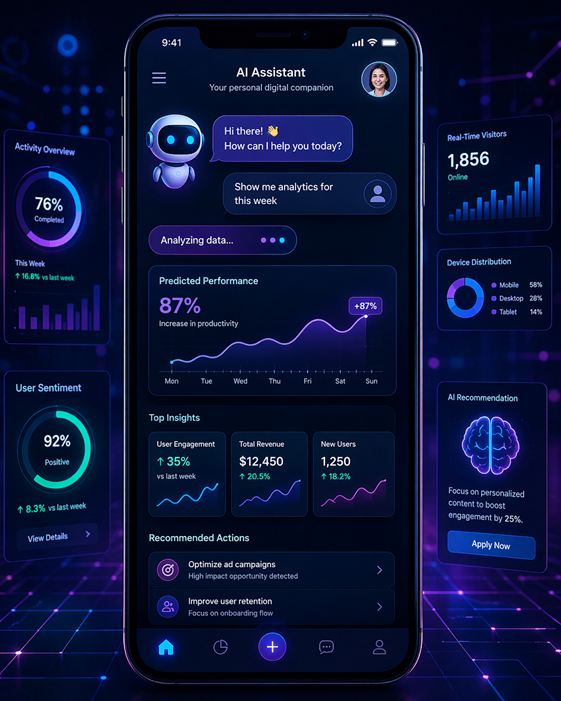
Artificial Intelligence and Machine Learning are transforming how apps function. Modern applications are becoming smarter, more intuitive, and capable of learning user behavior.
Key benefits:
- Personalized user experiences
- Smart recommendations
- Voice recognition and chatbots
- Predictive analytics
Apps like virtual assistants and recommendation engines are already leveraging AI, and this trend will only grow stronger.
2. Rise of 5G Technology
5G is revolutionizing app performance by providing faster speeds, lower latency, and improved connectivity.
Impact on app development:
- Faster data processing
- Enhanced AR and VR experiences
- Seamless video streaming
- Real-time gaming
The future of app development will heavily rely on 5G to deliver high-performance applications.
3. Cross-Platform App Development
Businesses want apps that work seamlessly across multiple platforms like Android, iOS, and web. Cross-platform frameworks such as Flutter and React Native are gaining popularity.
Advantages:
- Reduced development cost
- Faster time to market
- Consistent user experience
This approach will continue to dominate the future of app development as companies seek efficiency and scalability.
4. Internet of Things Integration
The Internet of Things connects devices and allows them to communicate with each other. Apps are now controlling smart homes, wearable devices, and industrial systems.
Examples:
- Smart home automation apps
- Health monitoring applications
- Industrial IoT dashboards
IoT will play a crucial role in shaping the next generation of apps.
5. Augmented Reality and Virtual Reality
AR and VR are no longer limited to gaming. They are now widely used in eCommerce, education, healthcare, and real estate.
Use cases:
- Virtual product try-ons
- Interactive learning
- Real estate virtual tours

6. Cloud-Based Applications
Cloud technology is transforming how apps are developed and deployed. Cloud-based apps offer scalability, flexibility, and cost efficiency.
Benefits:
- Easy data storage and access
- High security
- Reduced infrastructure cost
- Better collaboration
Cloud integration is a key pillar in the future of app development.
7. Progressive Web Apps
Progressive Web Apps combine the best of web and mobile applications. They are fast, reliable, and do not require installation.
Why they matter:
- Lower development cost
- Offline functionality
- Faster loading time
PWAs are becoming a popular choice for businesses looking for lightweight solutions.
8. Blockchain Technology
Blockchain enhances app security and transparency. It is widely used in fintech, healthcare, and supply chain applications.
Key advantages:
- Secure transactions
- Data integrity
- Decentralized systems
As cybersecurity concerns grow, blockchain will become more important in app development.
9. Voice Technology and Conversational Interfaces
Voice-enabled apps are gaining popularity with the rise of smart assistants.
Applications include:
- Voice search
- Smart home control
- Customer support chatbots
Voice technology will redefine how users interact with apps.
10. Low-Code and No-Code Development
Low-code and no-code platforms allow businesses to build apps without deep technical knowledge.
Benefits:
- Faster development
- Reduced dependency on developers
- Cost-effective solutions
These platforms are making app development accessible to a wider audience.

Benefits of Future App Development Trends
Enhanced User Experience
Apps are becoming more intuitive, personalized, and user-friendly.
Faster Performance
With technologies like 5G and cloud computing, apps are faster and more reliable.
Improved Security
Blockchain and advanced encryption ensure better data protection.
Cost Efficiency
Cross-platform and cloud-based solutions reduce development and maintenance costs.
Scalability
Modern apps can easily scale with business growth.
Challenges in the Future of App Development
1. Rapid Technological Changes
Keeping up with new technologies can be challenging for developers and businesses.
2. Security Concerns
As apps become more complex, security risks also increase.
3. High User Expectations
Users demand seamless performance, which requires continuous innovation.
4. Device Fragmentation
Developers must ensure compatibility across multiple devices and platforms.
5. Development Costs
Advanced technologies can increase initial development costs.
How Businesses Can Prepare for the Future
Invest in Modern Technologies
Adopt AI, cloud computing, and cross-platform frameworks.
Focus on User Experience
Design apps that are simple, fast, and engaging.
Prioritize Security
Implement strong security measures from the beginning.
Choose the Right Development Partner
Working with experienced companies like Infotech Wayout ensures success.
Why Choose Infotech Wayout for Future-Ready App Development
At Infotech Wayout, we specialize in building innovative, scalable, and high-performance applications tailored to your business needs.
What we offer:
- Custom mobile app development
- Cross-platform solutions
- AI-powered applications
- UI/UX design excellence
- Ongoing support and maintenance
We help businesses stay ahead in the ever-changing digital landscape.
The Future of App Development in India
India is becoming a global hub for app development. With a growing pool of talented developers and increasing digital adoption, the future looks promising.
Key factors:
- Affordable development costs
- Skilled workforce
- Government support for digital initiatives
The future of app development in India is expected to grow exponentially.
Conclusion
The future of app development is full of opportunities and innovation. From AI and 5G to blockchain and cloud computing, technology is transforming how apps are built and used.
Businesses that embrace these trends will gain a competitive advantage, while those that resist change may fall behind. Partnering with a reliable company like Infotech Wayout ensures that your app is future-ready, scalable, and successful.
FAQ Section
1. What is the future of app development?
The future of app development involves advanced technologies like AI, 5G, IoT, and cloud computing that enhance performance, user experience, and scalability.
2. Which technology will dominate app development?
Artificial Intelligence and cloud computing are expected to dominate due to their ability to improve functionality and efficiency.
3. Are cross-platform apps the future?
Yes, cross-platform development is growing rapidly because it reduces cost and development time while ensuring wider reach.
4. How will 5G impact mobile apps?
5G will enable faster data speeds, lower latency, and better real-time performance, enhancing user experience.
5. Is app development still a good career?
Yes, app development remains a highly in-demand career with excellent growth opportunities.
6. What role does AI play in app development?
AI helps in personalization, automation, predictive analytics, and improving user engagement.
7. Are Progressive Web Apps better than native apps?
PWAs are cost-effective and faster, but native apps still offer better performance for complex applications.
8. How can businesses stay updated with app trends?
Businesses should follow industry updates, invest in new technologies, and partner with experienced developers.

