
The eCommerce industry continues to grow rapidly as more consumers prefer shopping through mobile applications instead of traditional websites. From ordering groceries and fashion products to purchasing electronics and booking services, mobile shopping has become a part of everyday life. Businesses that want to stay competitive are increasingly investing in custom eCommerce app development to reach customers more effectively.
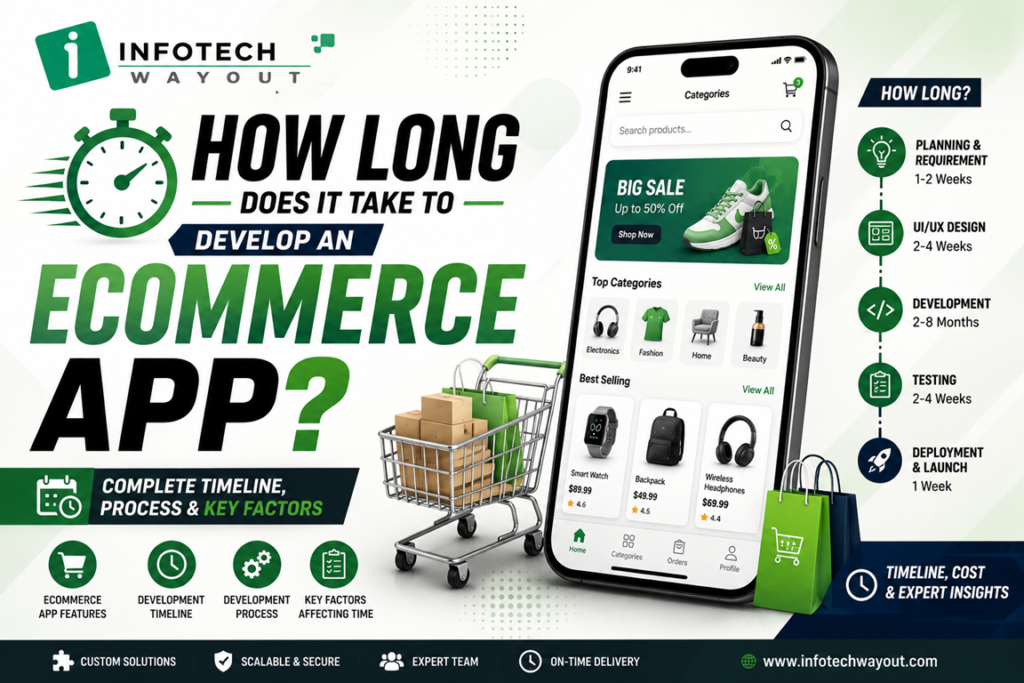
One of the most common questions business owners ask before starting their project is, “How long does it take to develop an eCommerce app?” The answer depends on many factors, including the complexity of the application, the number of features, the development platform, the technology stack, and the experience of the development team.
At Infotech Wayout, we have helped businesses build scalable, secure, and user-friendly eCommerce mobile applications for various industries. Based on our experience, a basic shopping application can be developed in a few months, while a feature-rich marketplace application may require significantly more time.
This comprehensive guide explains every stage of the eCommerce app development timeline, the factors that influence project duration, common challenges, and practical tips to help you launch your application successfully.
Why Every Business Needs an eCommerce App
Consumers today expect convenience. They want to browse products, compare prices, place orders, make secure payments, and track deliveries directly from their smartphones.
An eCommerce mobile app provides several advantages over relying solely on a website.
Better Customer Experience
A dedicated shopping application delivers a faster and more personalized experience than a mobile browser. Customers enjoy smoother navigation, saved preferences, one-tap checkout, and personalized recommendations.
Increased Customer Loyalty
Push notifications help businesses inform customers about promotions, discounts, abandoned carts, and new arrivals. This increases repeat purchases and strengthens customer relationships.
Higher Conversion Rates
Well-designed shopping applications generally convert visitors into buyers more effectively because they reduce friction throughout the purchasing journey.
Better Business Insights
An eCommerce application collects valuable customer data that helps businesses understand shopping behavior, optimize marketing campaigns, and improve product offerings.
How Long Does It Take to Develop an eCommerce App?
The average development timeline varies depending on the project’s complexity.
| App Type | Estimated Timeline |
|---|---|
| Basic eCommerce App | 1 to 2 Months |
| Medium Complexity App | 4 to 6 Months |
| Advanced eCommerce App | 6 to 10 Months |
| Marketplace Application | 8 to 12+ Months |
These estimates include planning, UI/UX design, development, testing, deployment, and launch.
If you want advanced capabilities such as AI recommendations, multilingual support, real-time inventory synchronization, loyalty programs, and analytics dashboards, the project duration naturally increases.
Major Factors That Affect eCommerce App Development Time
Several elements determine how quickly your application can be completed.
1. Project Requirements
Everything begins with understanding your business goals.
Questions that need answers include:
- What products will be sold?
- Who are the target customers?
- Which payment gateways will be used?
- Will the application support multiple vendors?
- Is inventory managed internally or through ERP software?
The more clearly these requirements are defined, the smoother the development process becomes.
2. App Complexity
Complexity is the biggest factor influencing development time.
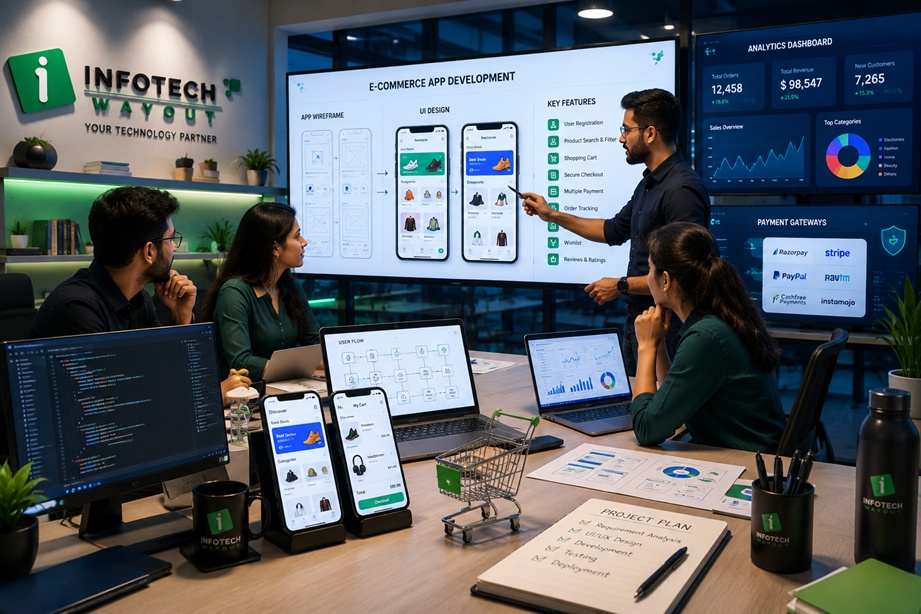
A simple online store includes:
- User registration
- Product catalog
- Shopping cart
- Secure checkout
- Payment gateway
- Order history
An advanced application may include:
- AI-powered recommendations
- Multiple sellers
- Real-time chat
- Subscription services
- Wishlist synchronization
- Multiple warehouses
- Coupon engine
- Loyalty rewards
- Dynamic pricing
- Product comparison
- Voice search
- Image search
Each additional feature increases development effort.
3. Choosing the Development Platform
The platform you choose also affects development time.
Native Android Development
Native Android apps are built specifically for Android devices. They provide excellent performance but require separate development from iOS.
Native iOS Development
Native iOS applications deliver outstanding user experience for Apple devices but require their own development process.
Cross-Platform Development
Frameworks like Flutter allow developers to build Android and iOS applications using a single codebase.
Many startups choose Flutter because it reduces development time while maintaining high performance.
At Infotech Wayout, we often recommend cross-platform development when businesses want faster deployment and lower long-term maintenance costs.
4. UI and UX Design
A beautiful interface requires careful planning.
Professional designers create:
- User flows
- Wireframes
- Interactive prototypes
- Brand identity
- Product pages
- Checkout experience
- Navigation systems
Good design takes time but significantly improves customer satisfaction.
A poorly designed application often results in abandoned shopping carts and lower sales.
5. Backend Development
The backend powers the entire application.
It manages:
- Customer accounts
- Product database
- Orders
- Payments
- Shipping
- Inventory
- Reports
- Admin dashboard
- Notifications
A scalable backend ensures your application performs well even during high traffic events such as festive sales.
Stage 1: Discovery and Planning
Estimated Duration: 1 to 2 Weeks
Every successful project begins with planning.
During this phase, developers and clients work together to define the project.
Activities include:
- Business analysis
- Competitor research
- Requirement gathering
- Technology selection
- Feature prioritization
- Timeline estimation
- Budget planning
- Development roadmap
Skipping this stage often leads to delays later.
Stage 2: Wireframing and User Experience Design
Estimated Duration: 2 to 3 Weeks
Before coding begins, designers create wireframes.
These demonstrate how users will:
- Browse products
- Search items
- Add products to cart
- Complete payments
- Track deliveries
Wireframes help identify usability issues early, saving both time and development costs.
Stage 3: UI Design
Estimated Duration: 2 to 4 Weeks
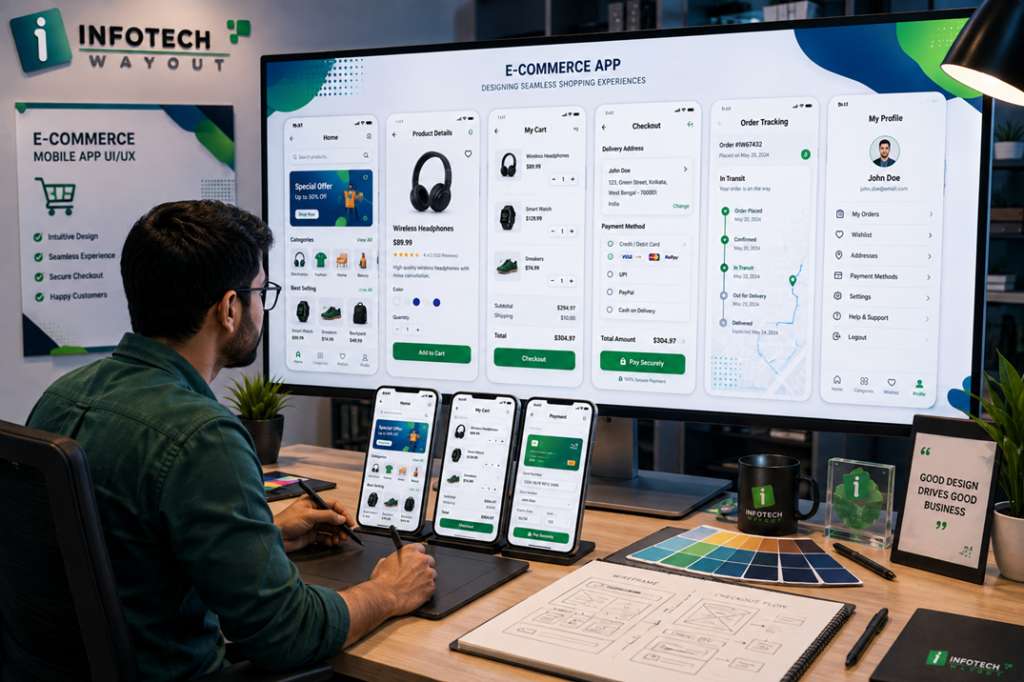
Once the wireframes are approved, designers create the visual appearance of the application.
This includes:
- Brand colors
- Typography
- Icons
- Product cards
- Buttons
- Checkout screens
- Account pages
- Order tracking interface
Modern shopping applications prioritize simplicity because customers expect quick and intuitive navigation.
Stage 4: Frontend Development
Estimated Duration: 4 to 8 Weeks
Frontend developers transform approved designs into working mobile application screens.
Key modules include:
User Authentication
Customers can:
- Register
- Log in
- Reset passwords
- Sign in using Google or Apple
Product Browsing
Customers browse products through:
- Categories
- Filters
- Search
- Recommendations
Shopping Cart
The cart allows customers to:
- Add items
- Remove products
- Update quantities
- Apply coupons
- Estimate shipping
Checkout
The checkout process must remain simple.
The fewer steps involved, the higher the conversion rate.
Modern checkout pages often include:
- Saved addresses
- Multiple payment methods
- Delivery options
- Tax calculation
- Order confirmation
This phase plays a major role in the overall eCommerce app development timeline, as it directly shapes the customer experience and requires close coordination between designers and developers.
Stage 5: Backend Development
Estimated Duration: 4 to 8 Weeks
While the frontend is what customers see, the backend is the engine that powers the entire application. Every action performed by a user, from signing in to placing an order, is processed through the backend.
A robust backend ensures that your eCommerce mobile app remains fast, secure, and scalable even when thousands of users are shopping simultaneously.
Backend development generally includes:
- User authentication and authorization
- Product database management
- Inventory management
- Order processing
- Customer account management
- Payment processing
- Shipping integration
- Notification services
- Analytics and reporting
- Admin dashboard APIs
Choosing a scalable backend architecture is important because your business will likely grow over time. Migrating to a new backend after launch can be expensive and time-consuming.
At Infotech Wayout, we design backend systems that are scalable from day one, allowing businesses to expand without major redevelopment.
Stage 6: Database Development
Estimated Duration: 1 to 2 Weeks
An eCommerce application stores a large amount of information.
Typical databases contain:
- Customer profiles
- Product information
- Categories
- Product images
- Pricing
- Discounts
- Coupons
- Order history
- Payment records
- Shipping information
- Reviews and ratings
The database structure must be optimized for speed because customers expect product pages to load almost instantly.
Poor database design often leads to slow search results and delayed checkout processes.
Stage 7: Payment Gateway Integration
Estimated Duration: 1 to 2 Weeks
Secure online payments are the backbone of every shopping application.
Depending on your business model, your app may support:
- Credit cards
- Debit cards
- UPI
- Net Banking
- Digital wallets
- EMI
- Buy Now Pay Later
- International payments
Popular payment gateways include Razorpay, PhonePe Payment Gateway, PayU, Cashfree, Stripe, and PayPal, depending on your target market.
Payment integration involves much more than simply collecting money.
Developers must also implement:
- Payment verification
- Failed transaction handling
- Refund management
- Invoice generation
- Payment history
- Fraud detection
- Secure encryption
Proper testing is essential to ensure that no payment failures occur after launch.
Stage 8: Shipping and Logistics Integration
Estimated Duration: 1 to 2 Weeks
Customers expect real-time delivery updates.
To provide this experience, developers integrate logistics providers into the application.
Features commonly include:
- Shipping cost calculation
- Live order tracking
- Delivery status updates
- Estimated delivery date
- Shipment notifications
- Multiple courier options
Businesses selling internationally may require integration with several shipping partners.
This increases development time but greatly improves customer satisfaction.
Stage 9: Admin Panel Development
Estimated Duration: 2 to 4 Weeks
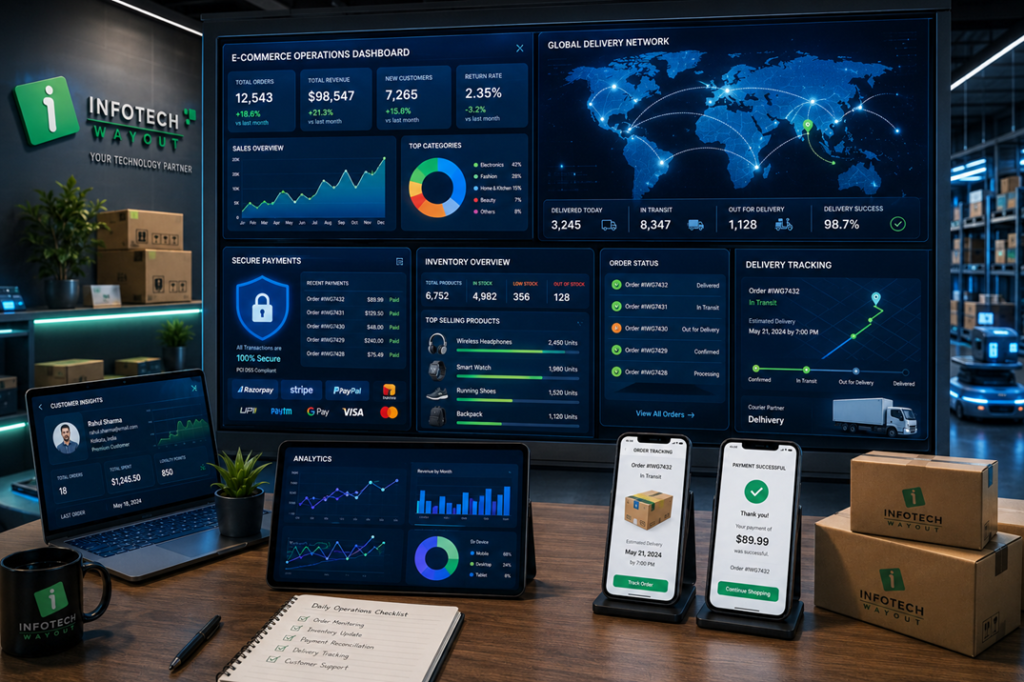
An admin panel gives business owners complete control over their online store.
Without an efficient admin dashboard, managing products and customers becomes difficult.
A typical admin panel includes:
Product Management
Administrators can:
- Add products
- Edit products
- Delete products
- Upload images
- Manage categories
- Update pricing
Inventory Management
The dashboard displays:
- Current stock
- Low inventory alerts
- Out-of-stock products
- Warehouse information
Order Management
Business owners can:
- View orders
- Update order status
- Generate invoices
- Manage returns
- Process refunds
Customer Management
The system allows administrators to:
- View customer profiles
- Review purchase history
- Manage support requests
- Block suspicious accounts
Sales Analytics
Business owners gain insights into:
- Revenue
- Best-selling products
- Customer growth
- Conversion rate
- Average order value
- Repeat purchases
An advanced analytics dashboard helps businesses make better decisions based on real data.
Stage 10: Third-Party API Integration
Estimated Duration: 2 to 3 Weeks
Modern eCommerce applications rarely operate independently.
Instead, they connect with multiple external services through APIs.
Examples include:
SMS Services
Customers receive:
- OTP verification
- Order confirmation
- Delivery notifications
Email Services
Automated emails include:
- Welcome messages
- Purchase receipts
- Promotional campaigns
- Password reset links
Push Notifications
Applications notify users about:
- Flash sales
- New arrivals
- Order updates
- Cart reminders
Maps Integration
Location services help users:
- Save addresses
- Track deliveries
- Find nearby stores
Analytics Tools
Businesses monitor:
- User engagement
- App installs
- Customer behavior
- Conversion funnels
Every additional integration adds functionality but also increases development complexity.
Stage 11: Testing and Quality Assurance
Estimated Duration: 2 to 4 Weeks
Testing is one of the most critical stages of eCommerce application development.
Launching an application without thorough testing can result in poor reviews, payment failures, security vulnerabilities, and customer dissatisfaction.
Quality assurance teams perform various types of testing.
Functional Testing
Every feature is verified to ensure it works as expected.
Examples include:
- User registration
- Login
- Product search
- Checkout
- Payment processing
- Order tracking
Performance Testing
Developers evaluate how the application performs when handling large numbers of users simultaneously.
This is especially important during festive sales or promotional events.
Security Testing
Sensitive customer information must be protected.
Security testing identifies vulnerabilities related to:
- User authentication
- Payment processing
- Data storage
- API security
- Server configuration
Device Compatibility Testing
Applications should work smoothly across different devices and screen sizes.
Testing is performed on:
- Android smartphones
- Android tablets
- iPhones
- iPads
Bug Fixing
After testing, developers fix any issues discovered before the application is released.
Skipping proper testing may shorten the timeline initially, but it often leads to higher maintenance costs and dissatisfied users after launch.
Stage 12: Deployment and Launch
Estimated Duration: 1 Week
Once testing is complete, the application is prepared for launch.
Deployment involves:
- Server configuration
- Database migration
- Performance optimization
- Security verification
- Play Store submission
- App Store submission
Publishing an app on the Apple App Store generally takes longer than publishing on Google Play because of Apple’s review process.
Businesses should account for this additional review time when planning their launch.
What Can Delay an eCommerce App Development Project?
Even with careful planning, certain factors can extend the development timeline.
Common reasons include:
Frequent Requirement Changes
Adding new features after development has started often requires redesigning existing components.
Unclear Business Goals
If project requirements are not finalized at the beginning, developers may need to revisit completed work.
Complex Custom Features
Features such as AI-powered recommendations, augmented reality product previews, or multi-vendor marketplaces require additional development and testing.
Third-Party Integration Issues
Sometimes external APIs change, experience downtime, or require additional configuration, causing delays.
Content Delays
Businesses often underestimate the time needed to prepare:
- Product images
- Product descriptions
- Pricing information
- Categories
- Marketing banners
Providing complete content early helps keep the project on schedule.
How to Reduce Development Time
Although quality should never be sacrificed, businesses can take several steps to accelerate the development process.
Finalize Requirements Early
Prepare a detailed list of features before development begins.
Start with an MVP
A Minimum Viable Product (MVP) includes only the essential features needed to launch.
Additional functionality can be introduced through future updates.
Use Cross-Platform Development
Frameworks like Flutter enable developers to build Android and iOS applications from a single codebase, reducing development time and maintenance costs.
Choose an Experienced Development Partner
An experienced eCommerce app development company understands common challenges, follows proven workflows, and can deliver projects more efficiently.
Why Choose Infotech Wayout for eCommerce App Development?
At Infotech Wayout, we specialize in building modern, secure, and scalable eCommerce applications tailored to your business goals.
Our development approach focuses on delivering applications that are not only visually appealing but also optimized for performance, security, and future growth.
When you work with us, you benefit from:
- Experienced developers and UI/UX designers
- Custom Android and iOS app development
- Flutter cross-platform solutions
- Secure payment gateway integration
- User-friendly admin dashboards
- SEO-friendly product architecture
- Performance optimization
- Scalable cloud-based backend systems
- Ongoing maintenance and support
- Transparent project management
Whether you’re a startup launching your first online store or an established business expanding into mobile commerce, our team can help you transform your idea into a high-performing eCommerce application.
Frequently Asked Questions (FAQs)
1. How long does it take to develop an eCommerce app?
The development timeline depends on the complexity of the application and the features you require.
Here is a general estimate:
- Basic eCommerce app: 1 to 2 months
- Medium complexity app: 4 to 6 months
- Advanced eCommerce app: 6 to 10 months
- Multi-vendor marketplace app: 8 to 12 months or more
Factors such as custom features, payment gateway integrations, inventory management, third-party APIs, and the number of supported platforms (Android, iOS, or both) significantly influence the timeline.
2. What features should every eCommerce app include?
A successful eCommerce app should provide a seamless shopping experience. Essential features include:
- User registration and login
- Product catalog
- Smart search and filters
- Shopping cart
- Wishlist
- Secure checkout
- Multiple payment options
- Order tracking
- Push notifications
- Customer reviews and ratings
- Profile management
- Customer support
- Admin dashboard
As your business grows, you can introduce advanced features like AI-powered recommendations, loyalty programs, voice search, and personalized offers.
3. Should I build a native app or a cross-platform app?
The right choice depends on your business goals and budget.
Native apps offer maximum performance and are developed separately for Android and iOS. They are ideal for businesses that require platform-specific features or highly optimized performance.
Cross-platform apps, built with frameworks like Flutter, use a single codebase for both Android and iOS. They reduce development time and cost while still delivering excellent performance.
For many startups and small to medium-sized businesses, cross-platform development is a practical and cost-effective option.
4. How much does it cost to develop an eCommerce app?
The cost varies depending on several factors, including:
- Number of features
- Design complexity
- Platform selection
- Third-party integrations
- Backend infrastructure
- Security requirements
- Ongoing maintenance
A basic application may require a modest investment, while a fully customized enterprise-level solution with advanced functionality will naturally cost more. The best approach is to discuss your requirements with an experienced development company to receive an accurate estimate.
5. Can I launch my app with basic features and add more later?
Yes. This is often the recommended strategy.
Launching with a Minimum Viable Product (MVP) allows you to:
- Enter the market faster
- Validate your business idea
- Collect customer feedback
- Reduce initial development costs
- Improve the application through regular updates
Many successful eCommerce platforms began with a simple feature set and expanded over time based on user needs.
6. What technologies are commonly used for eCommerce app development?
The technology stack depends on your project requirements, but commonly used technologies include:
- Flutter for cross-platform mobile app development
- Kotlin for Android applications
- Swift for iOS applications
- Node.js, Laravel, or Django for backend development
- MySQL, PostgreSQL, or MongoDB for databases
- Firebase for authentication and notifications
- AWS, Google Cloud, or Microsoft Azure for cloud hosting
Choosing modern, scalable technologies ensures that your application remains reliable and easy to maintain.
7. How important is testing before launching an eCommerce app?
Testing is one of the most important stages of development.
A well-tested application helps ensure:
- Secure payment processing
- Fast performance
- Smooth user experience
- Compatibility across devices
- Protection against security vulnerabilities
- Stable operation during high traffic periods
Comprehensive testing reduces the risk of negative reviews and costly post-launch fixes.
8. Why should I choose Infotech Wayout for eCommerce app development?
At Infotech Wayout, we combine technical expertise with a customer-focused approach to deliver high-quality mobile commerce solutions.
Our strengths include:
- Custom Android and iOS app development
- Flutter-based cross-platform solutions
- Intuitive UI/UX design
- Secure and scalable backend architecture
- Payment gateway and logistics integrations
- Transparent communication throughout the project
- Dedicated post-launch support and maintenance
Our goal is to build applications that not only look professional but also help businesses increase sales, improve customer engagement, and grow sustainably.
Final Thoughts
Developing an eCommerce app is more than writing code. It is about creating a digital shopping experience that is fast, secure, intuitive, and capable of growing alongside your business.
So, how long does it take to develop an eCommerce app? The answer depends on your business objectives, the complexity of your application, the technologies involved, and the expertise of your development partner. While a basic app can often be completed within a few months, advanced solutions with custom features require additional planning, development, and testing to ensure long-term success.
The key to staying on schedule is careful planning, clearly defined requirements, experienced developers, and a focus on quality rather than rushing the launch. Investing time in proper design, robust architecture, and thorough testing pays dividends through better customer satisfaction, stronger security, and higher conversion rates.
As mobile commerce continues to evolve, businesses that invest in high-quality applications today will be better positioned to meet changing customer expectations and remain competitive in the digital marketplace.
Partner with Infotech Wayout
If you’re planning to build a feature-rich, secure, and scalable eCommerce mobile application, Infotech Wayout is here to help.
From initial consultation and UI/UX design to development, testing, deployment, and ongoing support, our experienced team provides end-to-end eCommerce app development services tailored to your unique business needs.
Whether you are launching a new online store, modernizing an existing platform, or building a multi-vendor marketplace, we deliver solutions that combine innovation, performance, and reliability.
Ready to turn your eCommerce idea into reality?
Get in touch with Infotech Wayout today to discuss your project and receive a customized development roadmap. Together, let’s build an eCommerce application that delights your customers, drives sales, and supports your long-term business growth.

