
Introduction
In today’s digital world, mobile applications have become the backbone of modern businesses. From startups to large enterprises, everyone is investing in mobile apps to improve customer engagement, streamline operations, and increase revenue. However, building a successful application is not just about coding. It requires a structured and strategic approach known as the app development lifecycle.
At Infotech Wayout, we believe that understanding the entire lifecycle helps businesses make smarter decisions, reduce risks, and achieve better results. Whether you are planning to build your first app or looking to improve an existing one, this guide will walk you through every stage in detail.
What is the App Development Lifecycle?
The app development lifecycle refers to the complete process of creating a mobile application from initial idea to final deployment and maintenance. It is a systematic framework that ensures the app is developed efficiently, meets user expectations, and performs well in the market.
The lifecycle typically includes the following stages:
- Idea and Planning
- Research and Analysis
- UI/UX Design
- Development
- Testing
- Deployment
- Maintenance and Updates
Each stage plays a critical role in determining the success of your application.
Why Understanding the App Development Lifecycle is Important
Understanding the app development lifecycle is essential because it helps you:
- Reduce development costs
- Improve app quality
- Deliver projects on time
- Enhance user experience
- Minimize risks and errors
Businesses that follow a structured mobile app development process are more likely to succeed in a competitive market.
Stage 1: Idea and Planning
Turning an Idea into a Strategy
Every successful app starts with a strong idea. However, an idea alone is not enough. It must be validated, refined, and aligned with business goals.
Key Activities in This Stage
- Identifying the target audience
- Defining app objectives
- Choosing the app type (native, hybrid, or web)
- Creating a feature list
- Setting a budget and timeline
At Infotech Wayout, we help clients transform their ideas into actionable strategies by conducting detailed brainstorming sessions.

Challenges in Planning
- Unclear business goals
- Overloading features
- Budget miscalculations
Proper planning ensures a smooth app development lifecycle and reduces future complications.
Stage 2: Research and Analysis
Understanding the Market
Research is a critical step in the app development lifecycle. It helps you understand your competitors, target audience, and market trends.
Key Elements
- Competitor analysis
- User behavior research
- Market demand validation
- Technology selection
Choosing the Right Technology Stack
Selecting the right tools and technologies is crucial. This includes:
- Programming languages
- Frameworks
- Backend infrastructure
- APIs and integrations
A wrong choice can increase costs and affect performance.
Benefits of Proper Research
- Better decision making
- Reduced risks
- Improved user satisfaction
At Infotech Wayout, we ensure every project is backed by data-driven insights.
Stage 3: UI/UX Design
Creating User-Centric Designs
UI (User Interface) and UX (User Experience) design define how your app looks and feels. A well-designed app attracts users and keeps them engaged.
Key Design Components
- Wireframes
- Prototypes
- Visual design
- User journey mapping
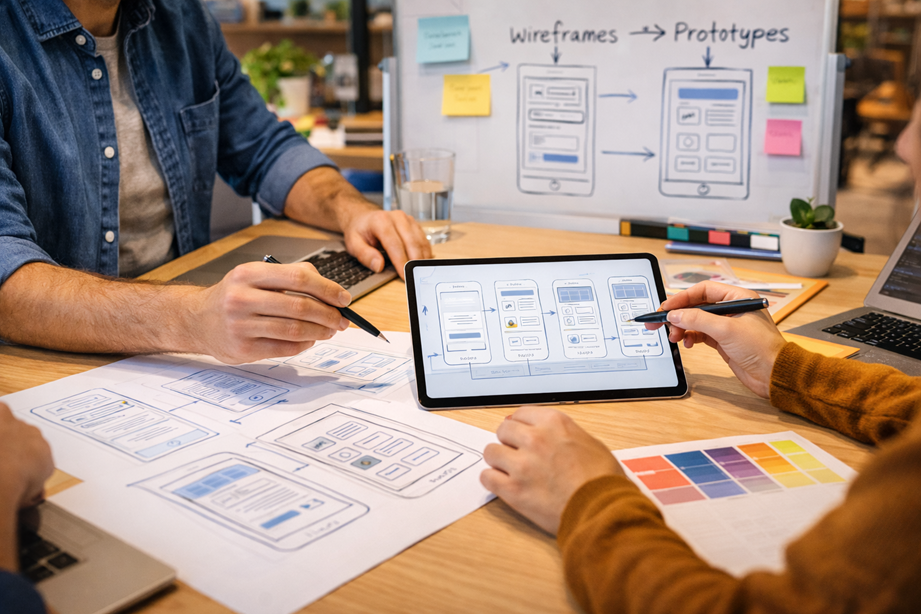
Importance of UI/UX in the App Development Lifecycle
A strong design can:
- Improve user retention
- Increase app usability
- Enhance brand image
Common Design Mistakes
- Complex navigation
- Poor color combinations
- Lack of responsiveness
Infotech Wayout focuses on creating intuitive and visually appealing designs that align with user expectations.
Stage 4: App Development
Bringing the App to Life
This is the core stage of the app development lifecycle where coding begins and the app takes shape.
Types of Development
- Frontend development
- Backend development
- API integration
Development Approaches
- Agile methodology
- Waterfall model
Agile is widely preferred because it allows flexibility and continuous improvement.
Key Technologies Used
- Android: Kotlin, Java
- iOS: Swift
- Cross-platform: Flutter, React Native
Challenges in Development
- Managing timelines
- Handling bugs
- Integration issues
At Infotech Wayout, we follow best coding practices to ensure high performance and scalability.
Stage 5: Testing and Quality Assurance
Ensuring App Performance
Testing is a crucial part of the app development lifecycle. It ensures the app is free from bugs and performs well under different conditions.
Types of Testing
- Functional testing
- Performance testing
- Security testing
- Usability testing

Importance of Testing
- Improves app reliability
- Enhances user satisfaction
- Prevents crashes and failures
Common Testing Challenges
- Device compatibility
- Time constraints
- Incomplete test coverage
Infotech Wayout uses advanced testing tools to deliver high-quality applications.
Stage 6: Deployment and Launch
Launching Your App
Once the app is tested and approved, it is ready for deployment.
Steps Involved
- Preparing app store listing
- Uploading to Google Play Store and Apple App Store
- Setting up analytics tools
App Store Optimization (ASO)
ASO helps improve visibility and downloads. It includes:
- Keyword optimization
- App description
- Screenshots and videos
Challenges During Deployment
- App store approval delays
- Compliance issues
- Technical errors
A smooth deployment marks a successful milestone in the app development lifecycle.
Stage 7: Maintenance and Updates
Keeping Your App Relevant
The app development lifecycle does not end after launch. Continuous maintenance is required to keep the app updated and functional.
Key Activities
- Bug fixing
- Performance optimization
- Feature updates
- Security patches

Importance of Maintenance
- Improves app longevity
- Keeps users engaged
- Adapts to market changes
At Infotech Wayout, we provide ongoing support to ensure your app remains competitive.
Benefits of Following the App Development Lifecycle
- Structured workflow
- Better project management
- Higher success rate
- Cost efficiency
- Improved user experience
The app development lifecycle ensures that every step is planned and executed effectively.
Common Mistakes to Avoid
- Skipping research
- Ignoring user feedback
- Poor testing
- Lack of updates
Avoiding these mistakes can significantly improve your app’s success.
How Infotech Wayout Helps You Build Successful Apps
At Infotech Wayout, we specialize in delivering end-to-end app development solutions. Our team follows a proven app development lifecycle to ensure:
- High-quality development
- Timely delivery
- Cost-effective solutions
- Excellent user experience
We combine innovation, technology, and strategy to build apps that drive results.
Future Trends in App Development
The future of the app development lifecycle is evolving with new technologies such as:
- Artificial Intelligence
- Machine Learning
- Blockchain
- Internet of Things
Businesses must adapt to these trends to stay ahead in the market.
Conclusion
The app development lifecycle is a structured approach that ensures the successful creation of mobile applications. From planning to maintenance, each stage plays a vital role in delivering a high-quality product.
By understanding and implementing this lifecycle, businesses can reduce risks, improve efficiency, and create apps that users love.
If you are planning to build an app, partnering with experts like Infotech Wayout can make the journey smoother and more successful.
Frequently Asked Questions (FAQs)
1. What is the app development lifecycle?
The app development lifecycle is a step-by-step process of creating a mobile application, including planning, design, development, testing, deployment, and maintenance.
2. How long does it take to develop an app?
The timeline depends on complexity, features, and technology. It can take anywhere from a few weeks to several months.
3. Why is testing important in app development?
Testing ensures the app is bug-free, secure, and performs well across different devices and conditions.
4. What is the cost of app development?
Costs vary based on features, platform, and development team. A basic app may cost less, while complex apps require higher investment.
5. What is the difference between native and hybrid apps?
Native apps are built for a specific platform, while hybrid apps work across multiple platforms using a single codebase.
6. How can I improve my app’s success?
Focus on user experience, regular updates, proper testing, and effective marketing strategies.
7. What is app maintenance?
App maintenance involves updating the app, fixing bugs, and improving performance after launch.
8. Why should I choose Infotech Wayout for app development?
Infotech Wayout offers expert solutions, follows a structured app development lifecycle, and ensures high-quality results tailored to your business needs.

