

Starting your mobile app development journey is one of the most rewarding decisions you can make in today’s digital-first world. Whether you are a business owner, entrepreneur, or a creative thinker, mobile apps provide a powerful way to reach audiences, streamline processes, and generate revenue. However, creating an app is not as simple as just having an idea — it requires planning, strategy, and execution.
In this blog, Infotech Wayout, a trusted web and app development company, will guide you through the 5 essential steps to start your mobile app development journey. From idea validation to launching your app in the marketplace, we will cover everything you need to know to get started.
Why Mobile App Development Matters Today
Mobile apps have become the backbone of modern business. With over 6.5 billion smartphone users worldwide, apps offer a direct and personalized channel for businesses to engage with customers. Whether you are launching an e-commerce platform, a service-based solution, or a utility tool, mobile apps ensure higher accessibility, improved user experience, and better business growth.
Before diving into the steps, let’s understand some benefits of starting your mobile app development journey:
- Wider Reach: Apps allow you to tap into the growing mobile-first market.
- Customer Engagement: Personalized push notifications and in-app messages keep users connected.
- Revenue Opportunities: Monetization models like ads, subscriptions, or in-app purchases.
- Brand Credibility: Professional apps enhance brand trust.
Step 1: Define Your App Idea and Goals
Every successful app starts with a clear idea. You must know what problem your app solves and how it benefits users. Ask yourself:
- Who is my target audience?
- What problem will my app solve?
- What unique value does my app bring compared to competitors?
A clear goal-oriented approach ensures your app development process stays focused. For example, if you’re building a fitness app, the goal might be to help users track workouts and stay motivated.
Key Considerations:
- Conduct market research to understand demand.
- Identify competitors and analyze their strengths and weaknesses.
- Define the core features your app must have.

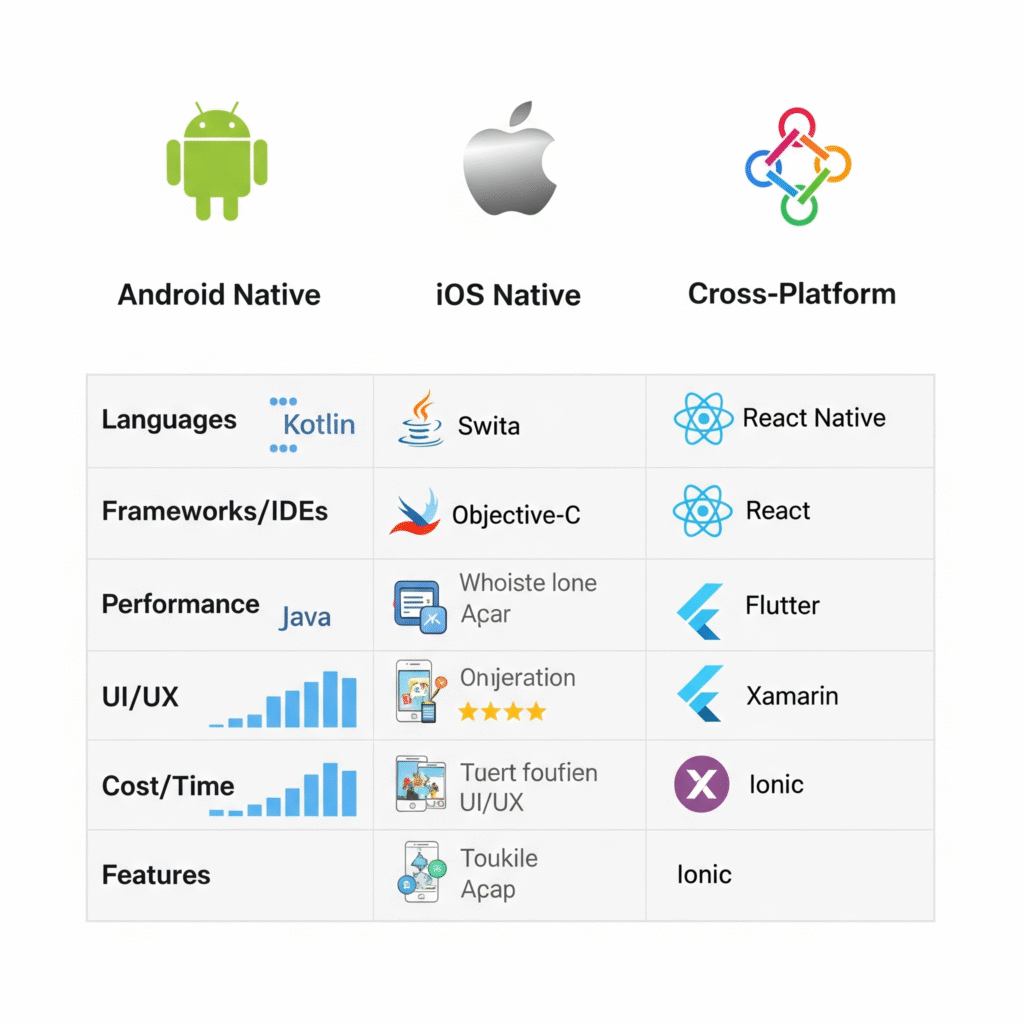
Step 2: Choose the Right Platform and Technology
Once you’ve defined your app idea, the next step is choosing the platform and technology stack.
Mobile App Platforms:
- iOS Development: Ideal for premium markets and high-spending users.
- Android Development: Perfect for wider reach, especially in emerging markets.
- Cross-Platform Development: Using frameworks like React Native or Flutter to build apps for both iOS and Android simultaneously.
Choosing Technology Stack:
- Frontend: React Native, Flutter, Swift, or Kotlin.
- Backend: Node.js, Python, PHP, or Java.
- Database: MySQL, Firebase, MongoDB.
Your decision depends on budget, target audience, and long-term vision.
Step 3: Design User-Friendly UI/UX
A great app is not just about functionality but also about how it feels to the user. User Interface (UI) and User Experience (UX) design play a crucial role in determining whether users will continue using your app.
UI/UX Best Practices:
- Keep the navigation simple and intuitive.
- Use consistent colors, fonts, and icons.
- Prioritize accessibility for all users.
- Design wireframes and prototypes before development.
At Infotech Wayout, we emphasize human-centered design that keeps users engaged and encourages app retention.

Step 4: Develop and Test Your Mobile App
This is the phase where your app starts taking shape. Developers write code, integrate APIs, and build features based on your requirements.
Key Stages in Development:
- Frontend Development: Creating the user-facing part of the app.
- Backend Development: Handling server-side logic, databases, and APIs.
- Integration: Connecting the app with payment gateways, third-party services, and analytics.
- Testing: Ensuring the app is free of bugs and works smoothly on multiple devices.
Testing is crucial to avoid crashes, glitches, or poor user experiences. QA engineers conduct unit testing, performance testing, and security testing to make sure your app is ready for launch.
📌 Image Placeholder Prompt: “Developers coding on laptops with testing team checking a mobile app interface on multiple devices.”
Step 5: Launch and Market Your App
Once your app is developed and tested, it’s time to launch. But launching is not the end — it’s the beginning of your journey.
App Launch Steps:
- Submit your app to Google Play Store and Apple App Store.
- Follow platform guidelines for approval.
- Optimize your app store listing with keywords, screenshots, and videos.
Marketing Your App:
- Use social media campaigns to create awareness.
- Invest in App Store Optimization (ASO) for better rankings.
- Collaborate with influencers and run paid ads to attract users.
- Collect user feedback for continuous improvement.

Common Challenges in Mobile App Development
Starting your mobile app development journey is exciting, but challenges are inevitable. Some common ones include:
- Budget constraints.
- Choosing the right platform.
- Managing development timelines.
- Ensuring security and data protection.
- Standing out in a competitive market.
Partnering with an experienced team like Infotech Wayout can help you overcome these hurdles effectively.
FAQs About Mobile App Development Journey
1. How long does it take to develop a mobile app?
It depends on the complexity. A simple app may take 2–3 months, while a feature-rich app may require 6–12 months.
2. How much does it cost to develop a mobile app?
The cost varies based on features, platform, and design. On average, it may range from $300 to $50,000 or more.
3. Should I build for Android or iOS first?
If your audience is global and budget is limited, start with Android. If you target premium users or US/European markets, iOS may be the best choice.
4. What is the difference between native and cross-platform apps?
Native apps are built specifically for one platform (iOS or Android), while cross-platform apps work on both using a single codebase.
5. How do I ensure my app is secure?
By implementing strong encryption, regular updates, secure APIs, and thorough testing during development.
6. Do I need to update my app regularly?
Yes. Regular updates fix bugs, improve performance, and keep users engaged with new features.
7. Can a mobile app help my small business?
Absolutely. Mobile apps improve customer engagement, build brand loyalty, and open up new revenue opportunities even for small businesses.
8. How do I market my app effectively?
Combine strategies like social media promotion, app store optimization, influencer marketing, and paid ads for maximum reach.
Conclusion
Starting your mobile app development journey may seem overwhelming, but breaking it down into five clear steps — idea validation, choosing the right platform, UI/UX design, development & testing, and launch & marketing — makes the process manageable and effective.
At Infotech Wayout, we specialize in guiding entrepreneurs and businesses through this exciting journey. With expert developers, designers, and marketers, we ensure your app not only gets built but also reaches the right audience.
If you’re ready to start your mobile app development journey, contact us today and take the first step toward building something extraordinary.

